

Speakers of EPPCT 2023
Keynote Speakers
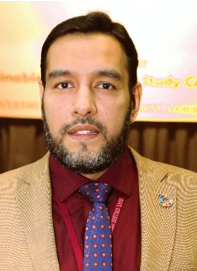
Prof. Abdul-Sattar Nizami
Sustainable Development Study Centre (SDSC), Government College University Lahore, Pakistan
(巴基斯坦拉合尔政府学院可持续发展研究中心教授,H值55,Renewable & Sustainable Energy Reviews/ Energy & Environment / Frontiers in Energy Research高级编辑)
Research Area:
Waste biorefinery; Waste-to-energy; Biofuels; Pyrolysis; Biogas
Dr. Abdul-Sattar Nizami has Master of Science in Engineering from the Chalmers University of Technology, Sweden. He has a Ph.D. in Sustainable Gaseous Biofuel from University College Cork, Ireland. He worked at the University of Toronto, Canada as a Postdoctoral Fellow on alternative fuels and life cycle studies. Later, he served as an Assistant Professor and Head of Solid Waste Management Unit at the Center of Excellence in Environmental Studies of King Abdulaziz University, Jeddah, Saudi Arabia. He is currently working as a Professor (Associate) at Sustainable Development Study Centre, Government College University, Lahore, Pakistan.
He has published over 150 papers on renewable energy, alternative fuels, waste-to-energy, catalytic pyrolysis, anaerobic digestion, and resource recovery. He has delivered 46 invited talks to various national and international forums. His work has been cited more than 10 thousand times in the peer-review press, with a total impact factor over 1100 and H-index of 55.
He is a Senior Editor in Renewable & Sustainable Energy Reviews (Elsevier Impact Factor 16.8), Energy & Environment (Sage Impact Factor 3.15), and Frontiers in Energy Research (IF 4.01). He serves as an Editorial Board Member in Bioresource Technology Reports (Elsevier) and Energy Sources Part B (Taylor & Francis IF 3.21). He is actively involved in community and consultation services to various international organizations, including the European Commission based IF@ULB, National Research Agency (NRA) of France, National Science Centre Poland, World Bank, and UNEP. He is ranked among Top 2% Scientists Worldwide by Stanford University, USA. His achievements have been selected as a Role Model by US Times Higher Education World University Rankings for King Abdulaziz University as No 1 in the Arab World in 2019. His recent UNEP report was published, 'Waste Management Outlook for WEST ASIA 2019, WASTE TOWEALTH'.
Speech Title: Zero Waste and Circular Economy in Asian World
Abstract:
A zero-waste concept is intended to valorize waste sources as renewable feedstock to recover value-added chemicals, materials, alternative fuels, and energy. This concept integrates waste treatment, resource recovery, alternative fuels, and energy generation to shift from fossil-based linear economies to circular economies. However, traditional linear economies, particularly in the Asian world, have resulted in rapid economic growth due to increasing energy demands, environmental pollution, and climate change. The Paris COP21 summit has recently set out a roadmap to reduce greenhouse gas (GHG) emissions to keep global warming to 'well below 2oC'. Like global warming, the tremendous waste generation and its unsustainable disposal have emerged as a potential threat to our civilization. It is estimated that the current waste generation rate will escalate by three times by 2025. Traditional waste remediation methods involve waste removal from collection points and disposal in designated dumping sites where waste valorization to generate energy and other value-added products are rarely performed. These sites have become a major source of GHGs emissions contributing to climate change. As a result, nations now focus on treating or refining waste instead of disposing, striving to recover energy and value-added products from waste to achieve a circular economy. In better words, using closed-loop waste bioprocessing units, the inherent net positive energy contained in solid, liquid, and gaseous wastes is harnessed and utilized as energy carriers. Despite their promising features, these individual processing technologies cannot handle the huge volume of waste at a single platform to achieve zero waste concept. They suffer from limited efficiencies and high capital and maintenance costs. Therefore, if these waste processing or waste-to-energy technologies could be integrated through the under-one-roof concept of a waste-driven factory, a significant part of wastes can be treated by various specialized techniques, while their outputs (heat, power, and fuel) could suffice the operating requirements of each other. An array of products, including heat, power, fuel, and value-added chemicals, enzymes, and materials, would be available not only to run the waste-driven factory by itself but to support the national electric grids, vehicular gas stations, combined heat and power (CHP) units, and domestic heating and industrial furnaces. However, such waste-driven factories' overall sustainability should be assessed through various tools, including life cycle assessment (LCA), life cycle impact assessment (LCIA), and exergy.
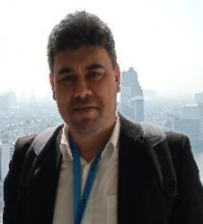
Prof. Dr. Mohammed J K Bashir, PhD
Environmental Engineering Department
Faculty of Engineering and Green Technology (FEGT)
Universiti Tunku Abdul Rahman, Jalan Universiti, Malaysia
(马来西亚拉曼大学,H值38,为巴勒斯坦、英国、马来西亚工程师协会会员,多个期刊编委、客座编辑)
Research Area:
Environmental Engineering & Management, Pollution Control and remediation, Waste Management, Landfilling, Waste to Energy, Wastewater treatment, Biomass conversion, Adsorption, Electrooxidation, Coagulation.
Prof Dr. Mohammed JK Bashir holds a PhD degree from Universiti Sains Malaysia and a keen interest in the field of Environmental Engineering, resource recovery, sustainable environmental& circular economy, water and wastewater treatment technologies, waste utilization, and waste to energy).
Currently, he is serving as a Professor and head of the Environmental Engineering department at Universiti Tunku Abdul Rahman Malaysia.
He is actively engaged in research, and international collaboration as he served as a visiting Professor at University of Indonesia 2021 and Hong Kong Baptist University in 2022, as an external expert at National Centre of Scientific and Technical Evaluation (NCSTE) in Kazakhstan. He also served as an editorial member in prestigious journals such as Environmental Technology, Processes, Water, Water Reuse, and Separations.
In terms of publication, he has published more than 250 articles, about 160 of which have been published in prestigious high-impact factor journals (WOS) such as Bioresource Technology, Journal of Cleaner Production, Journal of Environmental Management, Waste Management, Chemosphere, Total Science of Environment, Renewable Energy, Desalination, Journal of Chemical Engineering, Process Safety and Environmental Protection, Environmental Technology, Water Science and Technology, and many others. Today his h index is 39 with a total citation of 5700.
Along with his experience in teaching, he has secured more than 20 Awards including the best Ph.D research award from the School of Civil Engineering (University Science Malaysia, 2011) and excellent teaching performance from UTAR from 2015 to 2020, top cited paper, Silver and Bronze medal from the international exhibition in science and technology, and many others.
Speech Title: Emerging Contaminants Determination and Treatment Technologies: Recent Advances
Abstract:
In recent decades, the world's industrialization and economy have grown quickly, which has resulted in the generation of dangerous pollutants that have had a significant negative influence on both human health and the environment. A major environmental concern is posed by the presence of emerging contaminants (ECs) in water streams like pharmaceuticals, aromatic compounds, microplastics, dyes, etc. The majority of them pose a serious risk to the lives of living things.
Decision-maker jobs are becoming harder due to the possibility of ECs being leaked, having an unknown fate, being transported, or being exposed by multiple companies. Although their mechanism is still not completely understood, it is nonetheless important to comprehend the incidence, transformation, degradation, and prospective treatments of ECs.
Traditional wastewater treatment methods including activated sludge, membrane filtration, coagulation, adsorption, and ozonation demonstrated some effectiveness in the removal of emerging contaminants (ECs). However, traditional water treatment facilities are not equipped to handle a large number of ECs. Understanding new contaminants' critical health effects, their origins, and potential therapies is therefore necessary.

Assoc. Prof. Tao Zhang
College of Resources and Environmental Sciences, China Agricultural University, China
张涛副教授,中国农业大学资源与环境科学学院(H值28,农业部现代农业产业技术体系岗位专家功能研究室成员、中国农学会农业环境损害鉴定评估分会理事、中国环境科学学会水处理与回用专业委员会理事/循环经济专业委员会委员)
Research Area: Waste disposal and resource utilization
Research experience: Dr. Tao Zhang is an Associate Professor and Ph.D. supervisor at the College of Resources and Environmental Sciences, China Agricultural University, China. His academic interests are waste management, wastewater treatment, and utilization of agricultural waste. His H-index is 28 (Scopus, January 1st 2023) and he has published more than 70 papers in journals including Chemical Engineering Journal, Water Research, Journal of Hazardous Materials, Green Chemistry, and Renewable and Sustainable Energy Reviews, of which 11 are ESI Highly Cited Papers and 4 ESI Hot Papers. He has more than 20 Chinese patents to his name. He is an awarded Chinese scientist. Among his awards are the Outstanding Young Scientist Award, the China Innovation Award for Industry, the University Research Cooperation of China, the Character Award, and the Invention and Entrepreneurship Award of the China Association of Inventions.

Prof. El-Sayed Salama
School of Public Health, Lanzhou University, China
(H值28,公共卫生学院引进的高端外国人才,绿色环境与能源实验室(GEEL)负责人,2021年被聘为甘肃省生态产业特聘科技专家,可再生能源、生物燃料、微藻、浮游植物领域的Top 0.1%专家)
Research Area:
Environmental Sciences and Engineering
Research experience:
Prof. El-Sayed Salama obtained his BSc degree in 2008 at the Faculty of Science, Benha University (Egypt). He pursued MSc and PhD degrees in 2016 from the Department of Earth Resources and Environmental Engineering, Hanyang University (S. Korea). He has 3-years of work experience as a Post-Doc and Assistant Professor in the same department “under BK21 plus”, funded by the Korean government, HYU (S. Korea). Since 2018, he is working as a Professor under (High-Level Foreign Talents) at the Department of Occupational and Environmental Health, Public Health School (PHS), Lanzhou University (LZU), China. He was also appointed as the “Distinguished Expert of Science and Technology in the Ecological Industry” of Gansu Province (China) in 2021. He is a leader of the Green Environmental and Energy Laboratory (GEEL) with 4-projects and 11-graduate students (MSc & Ph. D.) at PHS, LZU.
Prof. Salama has potential contributions to the scientific society through 90-SCI papers with a total impact factor (IF)=816.206 (average IF=9.06). His publications as first and corresponding author appeared in high-level journals (Q1) such as Progress in Energy and Combustion Science (IF=35.339, Q1), Trends in Plant Science (IF=22.012, Q1), and Trends in Microbiology (IF=18.230, Q1), Renewable and Sustainable Energy Reviews (IF=16.799, Q1), and Water Research (IF=13.400, Q1). Two of his publications were recognized as highly cited papers on WOS. His name was also involved in 6-patents, 2-awards, 1-technology transfer, and 48-invited talks. According to the data of the “World Expertscape Analysis Database” over the past 10 years, he has been listed as a TOP 0.043%, 0.1%, 0.13%, and 0.076% expert in the fields of renewable energy, biofuels, microalgae, and phytoplankton, respectively. He has teaching experience in international universities such as Hanyang University (South Korea), Lanzhou University, and Sichuan University (China) under University Immersion Program (UIP). He is serving as Editor-In-Chief for the Journal of “BioEnvironmental Science & Health”. He is an Editor of “Geosystem Engineering” and “Current Chinese Science”. He has been the Associate Editor (Guest) of several Research Topics (RT) and special issues (SI) in “Frontiers in Microbiology”, “Frontiers in Marine Science”, and “Energies”. He was selected as an Editorial board member of “Biomass Conversion and Biorefinery”, “World Journal of Microbiology and Biotechnology”, and “Environmental Science & Ecotechnology”. In 2022, he was also selected as a member of “The Gansu Society of Microbiology” (China). He is also an editor and co-editor of various books focuses on biogas and microplastics. He acted as session chair and international committee member of different international conferences.
Speech Title:
Advances and Challenges in Microplastics
Abstract:
Recalcitrancy in microplastics (MPs) contributes to white pollution. Bioremediation can remove MPs and facilitate environmental sustainability. Although recent studies have been conducted on the interaction of algae and MPs, the role of algae in MP removal with the simultaneous implementation of 'omics studies has not yet been discussed. Here, we review the adverse effects of MPs on the environment and possible approaches to remove them from the aquatic environment by using algae. We highlight the mechanism of MP biodegradation, the algal species that have been used, and how these are affected by MPs. The MPs are potentially hazardous to the ecosystem, and their presence, particularly in water, may be a threat to human health. We have reviewed the possible use of microalgae to remove MP pollution from the aquatic environment. Microalgae (such as P. tricornutum, C. reinhardtii, Spirulina platensis, Chlorella sp., and Montenelia panniformis) have been studied over the past 5 years for the removal of high-concentration MPs bonded with other pollutants. We suggest that the application of algomics approaches and comprehensive evaluation of different enzymes (such as PETase) responsible for MP degradation may enable MP removal using algae. The application of abiotic factors (such as salt, phytohormones, nutrient limitation, temperature, and light) could be a potential approach to enhance algal growth and enzyme activity, which might improve MP degradation. However, an in-depth understanding of algal metabolism is needed to enrich cells with appropriate enzymes. Nevertheless, the development of competent algal strains for dual roles (i.e., MP removal and biomass production) could be supported by advances in algomics. Thus, we proposed that algomics, characterization of biodegrading enzymes, and genetic engineering could be effective strategies for optimizing MP degradation